Stairs and narrow halls: safe moves for Victorian homes
Posted on 18/06/2026
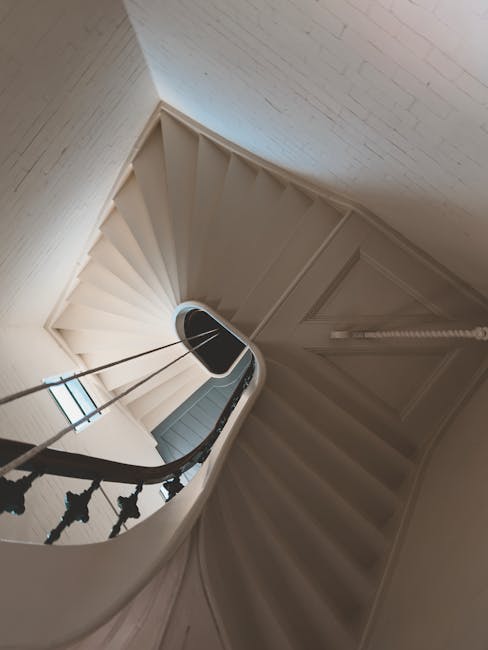
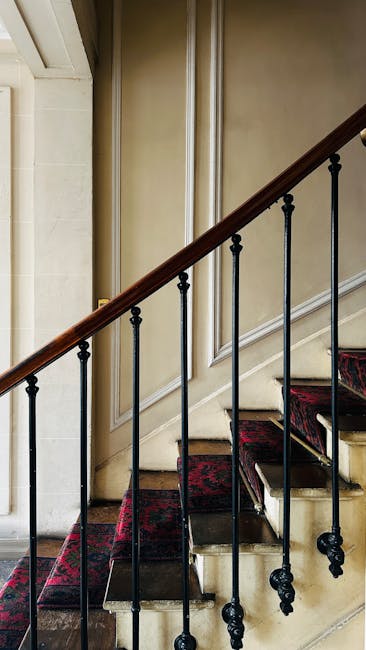
Victorian homes are lovely, aren't they? High ceilings, original rails, sash windows, and that old-house character that feels warm the minute you walk in. But when moving day arrives, the charm can turn into a puzzle very quickly. Tight stairwells, shallow landings, awkward turns, and narrow halls can make even a simple sofa feel like a small engineering project.
This guide to Stairs and narrow halls: safe moves for Victorian homes is here to make that puzzle easier. You'll find practical ways to measure, prep, lift, protect walls and banisters, and decide when to bring in extra help. If you are moving yourself, helping family, or planning a professional removal, the same principle applies: reduce strain, control the route, and don't improvise at the bottom of the stairs with a heavy wardrobe behind you.
Truth be told, Victorian layouts often look manageable until the item is halfway through the hall and everyone suddenly goes quiet. That's exactly why good planning matters.
Contents
- Why Stairs and narrow halls: safe moves for Victorian homes Matters
- How Stairs and narrow halls: safe moves for Victorian homes Works
- Key Benefits and Practical Advantages
- Who This Is For and When It Makes Sense
- Step-by-Step Guidance
- Expert Tips for Better Results
- Common Mistakes to Avoid
- Tools, Resources and Recommendations
- Law, Compliance, Standards, or Best Practice
- Options, Methods, or Comparison Table
- Case Study or Real-World Example
- Practical Checklist
- Conclusion
- Frequently Asked Questions
Why Stairs and narrow halls: safe moves for Victorian homes Matters
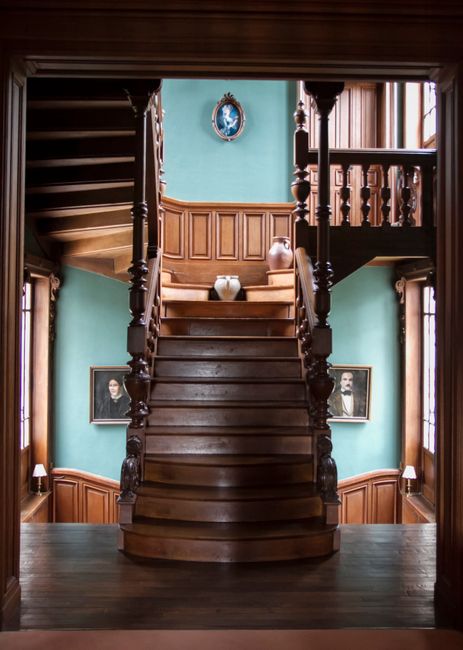
Victorian properties were not designed around today's oversized furniture, flat-pack packaging, or the idea that a mattress might be boxed and vacuum-sealed in one afternoon. Many homes from this era have compact passageways, steep internal stairs, corner turns that catch the elbow, and front doors that open straight into a constrained hall. That makes every movement more delicate.
The safety issue is bigger than a few scuffed walls. A poor lift, a rushed turn, or a missed step can damage the item, the property, or you. On narrow stairs, there's very little margin for error. One person leans too far. The item swings. Someone compensates. Suddenly a banister is scratched or a back is strained.
In our experience, the most common problem is not brute force. It's overconfidence. People look at the space, assume it's just a bit tight, and only realise the true difficulty when the item is already committed to the staircase. That is usually too late.
This matters especially in London homes where access can be fiddly, neighbours are close by, and the margin for holding items outside the front door is tiny. If you are dealing with a full move, the rest of the journey matters too, from packing order to loading sequence. A smart starting point is to review a broader moving plan alongside this topic, such as practical house moving hacks for a less stressful day and how to pack when moving house without creating extra chaos.
Expert summary: in Victorian homes, the safest move is rarely the fastest one. The best result usually comes from measuring first, stripping items down where possible, protecting the route, and using the smallest competent team you can trust.
How Stairs and narrow halls: safe moves for Victorian homes Works
Safe moving through stairs and narrow halls is really a route-management exercise. The item itself matters, of course, but the route determines how safe and workable the move will be. You are trying to fit size, weight, angle, and control into a confined space without losing balance or marking the home.
The process usually works in four stages:
- Measure the obstacle course. Check stair width, ceiling height on the bend, landing depth, door openings, and the tightest turn. Measuring tape in hand, not guessing from memory.
- Prepare the item. Remove loose parts, doors, cushions, shelves, handles, or legs where sensible. The fewer protruding edges, the safer the carry.
- Protect surfaces and plan footing. Use floor protection, corner guards, and clean routes. Victorian stairs can be polished, painted, or just a bit slippery in the wrong shoes.
- Move slowly with clear roles. One person should call directions. The others should focus on grip, balance, and the item's position. No one should be making assumptions mid-stair. That never ends well.
For bulky items, the real challenge is usually the turn on the staircase or the hallway pinch point, not the straight run. Sofas, mattresses, wardrobes, and pianos are classic examples. If you're dealing with furniture that needs careful handling or storage between stages, it can help to read about how to protect sofas during storage and transport and bed and mattress transport tactics that reduce hassle.
One small but useful point: moves in Victorian homes often succeed because the team stays calm, not because they rush. That sounds obvious. Still, on the day, it's easy to forget.
Key Benefits and Practical Advantages
Good planning for stair and hallway moves gives you more than safety. It can also save time, money, and a fair bit of household friction. Nobody wants to spend an afternoon debating whether to "tilt it a bit more" while blocking the whole landing.
- Less risk of damage. Protected walls, rails, and floorboards mean fewer repairs after the move.
- Lower chance of injury. Careful lifting and route planning reduce strain on backs, shoulders, knees, and fingers.
- Faster loading overall. Once the path is clear, items move more efficiently.
- Better item protection. Controlled handling lowers the chance of dents, tears, scratches, and internal damage.
- Less stress for everyone involved. Clear roles make the process feel more organised and less emotional.
- Smarter use of labour. A smaller, well-prepped job often beats a bigger, unfocused one.
There is also a practical financial angle. If an item has to be dismantled later, or if a damaged wall needs touching up, the "quick move" suddenly costs more. If you want to think more broadly about budgeting and the hidden edges of moving costs, it is worth pairing this with an explanation of removal pricing traps.
Short version: careful stair handling is rarely the flashy part of a move, but it is often the bit that decides whether the day feels manageable or memorable for all the wrong reasons.
Who This Is For and When It Makes Sense
This approach is for anyone moving within, into, or out of a Victorian home where access is not generous. It is especially relevant if you are dealing with one of these situations:
- stairs with a sharp turn halfway up
- narrow hallways that barely allow two people to pass
- tight front entrances with limited door swing
- first-floor flats in older converted terraces
- large furniture that cannot simply be carried upright
- fragile items that must stay level or protected
- moves with limited parking, short loading windows, or awkward timing
It also makes sense when you are moving on a deadline. Same-day moves, student moves, and short-notice changes tend to magnify every access issue. If your timing is tight, a well-structured service can help, as can a route-aware plan. For example, local moving situations with access pressure are often discussed alongside narrow-street moving tips and parking, access, and timing advice for SE26 moves.
When does it stop making sense to do it all yourself? Usually when the item is too long for the landing, too heavy for controlled turns, or too valuable to risk. That's the honest answer. Sometimes the "can we just try?" stage is exactly the stage to pause.
Step-by-Step Guidance
Below is a practical sequence you can use before the first box leaves the room. It is simple, but simple is good here.
1. Survey the route properly
Measure stair width, hallway width, ceiling height, door frames, and the landing at every turn. Check for handrails, light fittings, protruding bannisters, and sharp corner mouldings. Victorian properties love little surprises.
2. Decide what should be dismantled
Take apart beds, remove sofa feet if possible, detach table legs, empty wardrobes, and secure loose shelving. If the item becomes significantly easier to rotate after dismantling, do it early rather than midway through the hall.
3. Clear the pathway
Move rugs, shoes, plants, mirrors, and everything else the foot could catch. Open doors fully if they are in the way. Create a landing zone at both ends of the route so no one is stepping over clutter while carrying weight.
4. Protect the property
Use blankets, corner guards, and protective coverings where the item is likely to touch walls. On painted Victorian plaster, a single knock can leave a very visible mark. Better to overprotect than to shrug later.
5. Assign roles before lifting
One person leads. One person supports the rear. If there are three movers, the third manages doors, spotting, and the next move. Everyone should know when to stop. This sounds formal, but it actually keeps things calm.
6. Test the angles before committing
Lift an item partway, assess the turn, and think through the next three steps before continuing. A good mover rarely asks, "What now?" at the top of the stairs.
7. Move slowly and communicate clearly
Use short instructions: "steady", "up", "down", "pivot", "stop". Avoid long explanations while balancing a wardrobe in a hallway. People do not process speeches well in those moments.
8. Reset before the next item
After each heavy move, check the route again. Floors shift, protectors move, and people get tired. A reset takes a minute and can save a lot of regret.
If your move also involves organizing what stays, what goes, and what should be stored before the final handover, the article on decluttering and organising a transition fits neatly here.
Expert Tips for Better Results
A few small improvements can make a big difference in Victorian homes. These are the sorts of details that do not look dramatic on paper, but they matter a lot in real life.
- Use the right shoes. Good grip beats fashionable trainers every time. Slipping on polished stairs is a terrible way to start.
- Take photos before dismantling. Especially for beds, shelving, and modular furniture. Reassembly goes smoother when you can remember what was where.
- Wrap corners and edges generously. The edge of a chest of drawers can nick a wall faster than you'd think.
- Keep the item close to the body when possible. But not so close that you can't see where you're going. There's a balance.
- Pause on landings. If you need a reset, use it. Landings are there for exactly that reason.
- Plan for the return path too. Empty rooms and newly painted hallways can be just as tricky on the way out because you may be carrying something bulky in a different angle than expected.
- Think about the weather. Rainy shoes, wet steps, and damp cardboard do not mix well. A bit of old-fashioned caution goes a long way.
For especially awkward items, specialist handling may be the sensible route. A piano, for example, is not a "give it a go and see" object. It deserves dedicated planning, which is why guidance like why professional piano moving is crucial is worth reading before anyone tries to wheel a heavy instrument up a tight stairwell.
And for those times when your own lifting technique matters, a refresher on safer lifting mechanics and the benefits of good technique can be surprisingly useful. Small correction, big payoff.
Common Mistakes to Avoid
The same mistakes come up again and again in Victorian moves. Most are avoidable, and most are caused by rushing.
- Guessing measurements. "It should fit" is not a measurement.
- Forgetting the turn radius. The hallway may be wide enough, but the corner may not be.
- Leaving wall protection until the last minute. By then, the damage often starts before the protection goes up.
- Carrying items upright when a tilt-and-turn is safer. Some pieces need a specific angle to clear the route.
- Too many people, no clear leader. Extra hands can help, but too many voices make things messy.
- Ignoring fatigue. The fifth trip can be the one where people misjudge a step.
- Trying to force a stubborn item through. If it does not want to go, stop and re-evaluate. Seriously.
One small story we hear often: someone gets halfway down the stairs with a sofa, then realises the armrest is catching on the banister. The room goes silent. Everyone does that little awkward shuffle. That moment is exactly why pre-planning exists.
If you're already thinking about what to keep, what to move, and what can wait, it is useful to look at pre-move cleaning ideas and smarter packing guidance so the house is ready before the heavy lifting starts.
Tools, Resources and Recommendations
You do not need a van full of specialist kit for every move, but a few well-chosen tools make older properties far easier to manage.
| Tool or item | What it helps with | Why it matters in Victorian homes |
|---|---|---|
| Measuring tape | Checking stairs, hallways, and door clearances | Old layouts often look wider than they are |
| Furniture blankets | Protecting surfaces and corners | Victorian plaster, skirting, and bannisters mark easily |
| Corner guards | Reducing wall damage on turns | Landings are usually the danger point |
| Straps and lifting aids | Improving control over heavy items | Helps with balance on narrow stairs |
| Gloves with grip | Better handling and less hand strain | Useful for awkward, heavy, or slippery items |
| Floor protection | Shielding boards and carpets | Protects older finishes that can be expensive to repair |
Resource-wise, the best support is often the wider moving plan. If you want help deciding what kind of move service suits your property type and item list, the site's services overview can help you understand the service landscape. For smaller or tighter moves, the guides on furniture removals, flat removals, and man and van support can be especially relevant.
For movers who need a quicker turnaround, there is also value in knowing whether a same-day removals option fits the job, though narrow Victorian access still benefits from planning, even when the timescale is short.
Law, Compliance, Standards, or Best Practice
For domestic moving, there is usually no single legal rule that says how a staircase must be used during a house move. But there are strong UK best-practice expectations around safe manual handling, risk awareness, and protecting people and property. In plain English: if a job looks likely to cause injury or damage, it should be planned rather than improvised.
Good practice generally means:
- avoiding lifts that exceed the team's capability
- using enough people for the weight and shape of the item
- keeping routes clear and dry
- protecting residents, workers, and visitors from avoidable risks
- stopping work if a lift becomes unsafe
Insurance is another part of the picture. If movers are working inside a property with tight access, it is sensible to understand what is covered, what exclusions might apply, and how damage would be handled if something unexpected happens. The safest approach is to review the provider's insurance and safety arrangements before the day arrives. If you prefer to check service expectations at a high level, insurance and safety information is the kind of page that should be part of your decision-making.
It also helps to know that reputable operators tend to have written policies on health and safety, accessibility, and complaints. Those aren't just boxes to tick; they tell you how seriously the business takes handling difficult homes. A bit boring on the surface, maybe. Very useful in practice.
Options, Methods, or Comparison Table
Different moves call for different methods. Here is a simple comparison to help you decide what is sensible for your Victorian property.
| Method | Best for | Advantages | Limits |
|---|---|---|---|
| Self-move with helpers | Small loads, light furniture, short internal routes | Lower direct cost, flexible timing | Higher risk if the stairwell is tight or the item is bulky |
| Man and van with loading help | Medium-sized household moves, mixed furniture, short hops | Practical balance of support and value | Still depends on access being properly assessed |
| Specialist removals team | Heavy, valuable, or awkward items | Better control, more experience, more suitable equipment | Usually the most expensive option |
| Storage before final move | Staged moves, renovation delays, overcrowded homes | Reduces pressure on moving day | Needs an extra step and more coordination |
There is no universal winner. A narrow staircase and a long wardrobe do not care about your budget logic. They either fit, or they don't. That's the blunt version.
For some moves, especially where you are dealing with a mix of large furniture and a tight deadline, a combination of storage and staged transport is the most practical path. If that sounds familiar, you may find storage options useful alongside the general moving plan.
Case Study or Real-World Example
A typical Victorian move might look like this: a two-storey terrace, a narrow front hall, and a staircase that turns sharply at the half-landing. The main items are a three-seater sofa, a double bed frame, a mattress, a bookshelf, and several boxy items that could be awkward on the bend.
The move starts with measurement. The sofa is checked against the hallway width and stair turn. The bed is dismantled in advance, mattress wrapped, and loose fittings bagged and labelled. The hallway is cleared, wall corners are covered, and a blanket is laid at the bottom of the stairs. One person calls the route, another manages the sofa's rear end, and the third keeps doors open and the landing clear.
The sofa does not move upright. It is tilted, tested against the banister line, paused at the turn, and then eased through with a little more rotation than expected. Not forced, just coaxed. The mattress goes next, on edge, with a short rest on the landing because the bend is tighter than it first appeared. By then the team is warmed up, but not rushed.
What made the difference? Not strength, really. Preparation. The kind that prevents the "oh no" moment halfway up the stairs.
That same logic often helps with awkward local access too, especially where parking and timing can complicate a move. If you're planning around a busy street or event-day access issues, the guide on navigating event-day removals is a good example of how location affects the moving day plan.
Practical Checklist
Use this checklist before lifting anything heavy in a Victorian home. You do not need to be perfect, just organised.
- Measure stairs, halls, landings, and door widths.
- Check whether furniture can be dismantled.
- Remove loose parts, shelves, cushions, and fittings.
- Clear the route of shoes, rugs, cables, and clutter.
- Protect walls, corners, bannisters, and floors.
- Assign one person to lead instructions.
- Wear shoes with solid grip.
- Test turns before committing to a full lift.
- Pause on landings if the item needs re-angled.
- Keep water, phone access, and a first-aid kit close by.
- Stop immediately if a lift feels unstable.
- Review whether storage or a specialist team would be safer.
A final pre-move tip: if you still have a lot of sorting to do, pair this checklist with decluttering and transition planning. Less clutter means fewer obstacles and fewer last-minute decisions.
Get a free quote today and see how much you can save.
Conclusion
Victorian homes have character, but they also have access challenges that deserve respect. The stairs are often steeper than they first appear, the halls narrower, and the turns less forgiving. Safe moving in these spaces is not about bravado. It is about route planning, good lifting, patience, and knowing when a job needs extra support.
If you take anything from this guide, let it be this: measure carefully, reduce load where you can, protect the property, and never let the staircase set the pace. A move through a Victorian home can be smooth. It just needs to be handled with a bit of care and a calm head.
And honestly, that calm head is worth more than a rushed extra pair of hands.