Book a parking suspension: avoid fines on Sydenham Hill
Posted on 12/07/2026
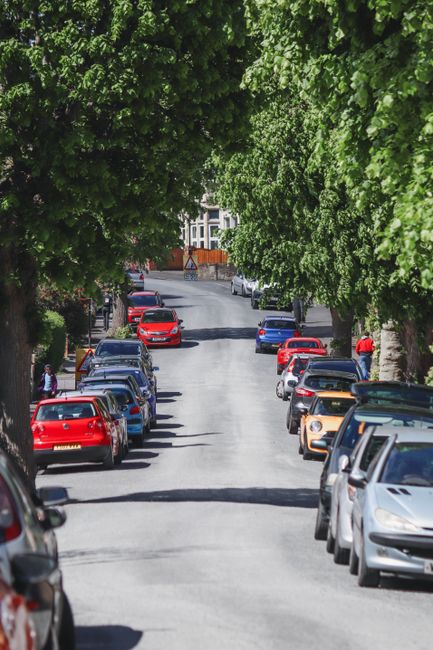
If you are planning a move, delivery, clear-out, or any kind of van access in SE26, the last thing you want is a parking ticket turning up after the dust has settled. That is why so many people choose to book a parking suspension: avoid fines on Sydenham Hill and keep the day running smoothly. On a hill with narrow roads, limited kerb space, and the usual London pressure on parking, a few minutes of planning can save you a lot of stress. Truth be told, parking is often the bit people underestimate until the van is already outside.
This guide explains what a parking suspension does, when it makes sense, how the process usually works, and the mistakes that can trip people up. It also gives you a practical way to think about timing, access, compliance, and backup plans so you can keep your move or delivery calm rather than chaotic.
Why booking a parking suspension matters
Parking on Sydenham Hill can be awkward at the best of times. Spaces disappear early, kerb access can be tight, and a van that is perfectly reasonable for moving furniture may still overhang a bay, block access, or sit where restrictions apply. If you are loading bulky items, working to a timetable, or coordinating helpers who can only stay for a short window, parking becomes more than a convenience issue. It becomes a risk issue.
A suspension is basically a temporary arrangement that reserves a parking space or restricts normal parking so a vehicle can stop in a specific place for a planned job. For removals, that can mean the difference between carrying a sofa 60 metres down the road or loading it directly from the front door. And yes, that matters. A lot.
On streets with steep gradients or narrow frontage, delays build quickly. A van circling for a space can set the whole move back, which then affects neighbours, building access, lift bookings, contractor windows, and everyone's patience. If you have ever watched a crew shuffle a wardrobe in the rain because the vehicle was two streets away, you already know the feeling.
For that reason, many people planning a house move, flat move, office move, or same-day delivery will look at local access first and ask how to understand Lewisham Council van permit rules for Sydenham Hill before moving day arrives. That kind of early thinking is usually what keeps small problems small.
How booking a parking suspension works
In plain English, a parking suspension is a short-term restriction arranged in advance so a vehicle can lawfully occupy space that would otherwise be open to regular parking. In practice, the exact process depends on the local authority, the street, the timing, and the type of vehicle involved. You usually need to provide details such as the location, date, duration, purpose, and vehicle size.
Most people find that the process is not difficult, but it does reward accuracy. Get the address slightly wrong, miss the lead time, or underestimate how much space the van actually needs, and the whole plan can wobble. Not a disaster, but annoying. Very annoying.
A good booking should aim to answer four questions:
- Where exactly will the vehicle stop?
- For how long is the space needed?
- What type of vehicle will use it?
- Is the planned use consistent with the local rules?
That last point matters. A parking suspension is not a magic wand. It does not cancel every restriction in the area, and it does not override general traffic rules, dropped kerbs, yellow lines, or access requirements unless those are specifically addressed in the approved arrangement. So the safest approach is to treat it as one part of the logistics plan, not the whole plan.
If you are planning a move with the help of a team, the suspension should be coordinated with packing, lifting, route timing, and access at the property. For example, a well-prepared move that uses smart packing techniques for moving house will usually be easier to load quickly, which can reduce the time the vehicle needs to remain in place.
Key benefits and practical advantages
The obvious benefit is avoiding fines. But the real value is broader than that. A parking suspension helps create a controlled loading space, which in turn reduces friction across the rest of the job.
- Less risk of penalties: If the vehicle is stopped in a properly arranged space, you are less likely to return to an unwelcome envelope on the windscreen.
- Better time management: A close loading point can shave a surprising amount of time off a move.
- Safer lifting: Shorter carrying distances reduce strain, especially for heavy or awkward items.
- Improved neighbour relations: Clear planning reduces awkward blockages, double-parking, and frustration on the street.
- Less last-minute panic: The team can focus on loading, not on hunting for a legal space.
There is also a subtle but important benefit: confidence. When the parking side is under control, people relax. You can hear it in the tone of a job almost immediately. The team moves more steadily. The handovers are calmer. The whole thing feels less like a scramble.
That is especially helpful when the move includes large or delicate items. If you are shifting a piano, for example, parking distance can affect both safety and handling. A closer vehicle position can make a meaningful difference, particularly alongside professional piano moving support.
Who this is for and when it makes sense
Booking a parking suspension is not only for full house moves. It can help in plenty of everyday situations where access is tight and time matters.
- Home movers: Especially where you have furniture, appliances, or boxes to load close to the door.
- Flat moves: Common in places where parking is limited and carrying goods from a distance would be a pain.
- Office relocations: A business move often has a fixed handover window, so delays cost more than just time.
- Same-day removals: Quick turnarounds leave little room for parking uncertainty.
- Students and short-term tenants: Often moving in and out with limited help and a tighter schedule.
- Bulky-item deliveries: Sofas, beds, wardrobes, pianos, white goods, and office furniture all benefit from proper access planning.
It makes the most sense when one or more of these apply:
- The street is consistently congested.
- The nearest legal parking bay is too far from the entrance.
- The vehicle will need to stay in one place for loading or unloading.
- Neighbours, schools, or traffic patterns make stopping difficult.
- You are already working to a tight schedule.
There are cases where a suspension may be overkill. If you are just collecting a small item and can safely use a legal bay nearby, you may not need one. But if you are moving at scale, or if the road layout is awkward, the safer option is usually to plan ahead rather than improvise.
Step-by-step guidance
Here is a practical way to approach the process without overcomplicating it.
- Assess the job properly. Note the property type, the number of items, the van size, and how long loading is likely to take.
- Check the street conditions. Look at bay availability, yellow lines, bends, corners, narrow widths, and any likely pinch points.
- Decide whether a suspension is necessary. If a van could legally and safely stop nearby without causing disruption, you may not need to reserve a space.
- Plan the timing. Morning moves often work best, but not always. Sometimes school traffic, bin collection, or nearby events make a different window smarter.
- Gather the details. Have the exact address, dates, times, vehicle information, and reason for the suspension ready.
- Allow enough lead time. Leave plenty of room for administration and any changes. Leave it to the last minute and you'll feel it later, almost always.
- Coordinate the rest of the move. Packing, dismantling, lifting, and route planning should match the parking window, not fight against it.
- Confirm the arrangement before the day. Do not assume everything is set just because you asked once.
- Prepare a backup. If the reserved spot is unavailable or the layout changes, know where the vehicle can stop next.
A move feels much smoother when the packing side has been handled properly too. A good example is working through hassle-free house moving hacks before the day begins, because organised loads tend to shorten the loading window and lower the pressure on your parking plan.
Expert tips for better results
Here are the little things that often make the biggest difference.
- Measure the vehicle footprint realistically. A standard van needs more room than people think, especially if the rear doors need full opening space.
- Think about swing space. A parked van that is technically in the right place can still be awkward if doors, ramps, or trolleys need extra room.
- Pair parking with decluttering. The less you move, the less time you spend loading. Simple, but powerful. If you are cutting back before a move, decluttering and organising your transition can make a real difference.
- Label the priority items. Load the first-off items in a sensible order so you are not digging around for the kettle or bedding at the other end.
- Use lifting methods that suit the item. Heavy objects should be moved with care and the right technique, not just brute force. There is a reason teams talk about kinetic lifting and its key benefits when handling awkward loads.
- Don't forget the building itself. Narrow halls, stairs, and shared entrances can slow the job more than the parking itself.
Small detail, but worth saying: weather changes everything. A dry, bright morning is one thing; a damp afternoon with people coming and going is another. In the rain, loading takes longer, the ground gets slick, and nobody wants to carry a mattress down a slope while pretending they are fine. They are not fine.
If your job includes fragile or special-care items, build in extra buffer time. That is especially true for a bed and mattress move or for large furniture that needs protection before it leaves the property.

Common mistakes to avoid
Most parking-related problems come from the same handful of mistakes. They are common, but avoidable.
- Leaving it too late: The most frequent issue. If you book late, you reduce your options and increase the chance of a rushed arrangement.
- Using the wrong address detail: A tiny location mismatch can matter a lot on a busy street.
- Underestimating time on site: People often think loading will be quick until they meet the staircase, the sofa, and the hallway all at once.
- Assuming one suspension fits every situation: Not every vehicle size, street layout, or loading style works the same way.
- Forgetting to brief the crew: Everyone needs to know where the vehicle is meant to stop and what the fallback plan is.
- Ignoring local traffic rhythms: School runs, commuter periods, and weekend patterns can all affect access.
A lot of stress comes from hidden assumptions, not big failures. If you are comparing services and trying to keep costs in check, it is worth understanding the less obvious parts of the job too. This is where hidden fees and pricing traps become relevant, because parking and access issues can influence the overall move budget.
And one more thing: do not assume a quiet street is an easy street. Sometimes the quiet ones are the most awkward because there is nowhere obvious to stop. Funny how that works.
Tools, resources and recommendations
You do not need a huge toolkit, but the right basics help.
- Measuring tape: Useful for checking whether a van can fit safely in a proposed loading space.
- Floor plan or rough sketch: Handy for working out the loading sequence and where items are coming from.
- Labels and marker pens: These save time when items need to come off in a specific order.
- Protective wrapping: Particularly important for furniture, mirrors, glass, and painted surfaces.
- Spare blankets or covers: Useful for protecting both the vehicle and the load.
- Clear contact notes: Someone should always know the approved plan and the timing.
It can also help to pair the parking plan with other moving prep. For example, if you are storing items between properties, or waiting for keys, checking storage options in Sydenham Hill can reduce pressure on moving day and make scheduling easier.
For more general preparation, a few other useful reads include safe moves for Victorian homes with stairs and narrow halls and moving tips for narrow-street homes. Those sorts of practical details often decide whether the day feels tidy or messy.
Law, compliance, standards, and best practice
Parking suspensions sit in the world of local authority parking controls, so the main rule is simple: follow the process precisely and do not rely on informal assumptions. The specific requirements can vary by street and by council, and they may be updated. So it is best to treat all parking arrangements as time-sensitive and location-specific.
From a best-practice point of view, the main principles are:
- Accuracy: Give the exact location, dates, and vehicle details.
- Clarity: Be clear about why the space is needed and how long for.
- Lead time: Leave enough room for approval and any signage or operational setup.
- Respect for other road users: Avoid creating obstruction, unsafe access, or confusion.
- Documenting the plan: Keep a record of the request, confirmation, and any instructions.
If a parking suspension is being used as part of a commercial move, a good operator should also have sensible health and safety practices, insurance awareness, and a clear loading method. That matters because the parking arrangement is only one piece of a wider risk-management picture. A reliable team will think about the vehicle, the route, the lift, and the handover points together.
In our experience, the most dependable moves are the ones where nobody is improvising at the kerb. A bit of order goes a long way.
Options and comparison table
Here is a simple comparison of common access options people consider when trying to avoid fines and keep a move moving.
| Option | Best for | Pros | Trade-offs |
|---|---|---|---|
| Parking suspension | Longer loading or unloading, larger vehicles, tighter streets | Better access control, lower fine risk, faster loading | Needs advance planning and correct details |
| Standard legal parking bay | Small collections or short jobs | Simple if space is available | Not always close enough, can disappear quickly |
| Timed arrival with no reservation | Very small moves with flexible timing | Quick to arrange | Highest uncertainty and possible delays |
| Off-street loading area | Properties with driveways, forecourts, or private access | Good control and safer loading | Not available on many Sydenham Hill properties |
If you are unsure which approach fits, think about the size of the load, the street width, and the time window. For many removals on Sydenham Hill, a suspension is the cleaner option because it reduces guesswork. But if your job is tiny, the simplest setup may be enough.
Case study or real-world example
Here is a realistic example based on the sort of job that comes up often. A couple are moving from a top-floor flat on a Sydenham Hill side road into a house a short distance away. They have a wardrobe, a bed frame, several boxes, and a freezer that has been switched off and cleaned. The road is narrow, parked up early, and the closest free space is not exactly helpful.
At first, they assume the van can just "find somewhere nearby." That sounds fine until the actual day, when the vehicle arrives and every sensible stopping point is already taken. After a quick rethink, they arrange a parking suspension for the loading window, allowing the van to stop close enough for the heavy pieces to come out safely.
The result? Less carrying distance, fewer pauses, no illegal stopping, and a calmer crew. The fridge-freezer goes out last with proper care, the mattress doesn't end up wobbling down the pavement, and the move finishes on schedule. Nothing magical. Just good planning.
That sort of setup is also useful when you are handling awkward items or storing them temporarily. If furniture needs extra protection between homes, it can help to read about sofa storage techniques and optimising storage for an unused freezer so nothing gets damaged while you sort out the logistics.
Practical checklist
Use this checklist before moving day. It is simple, but it catches most of the avoidable problems.
- Confirm the exact address and street name.
- Check whether the van needs reserved kerbside space.
- Estimate loading and unloading time realistically.
- Make sure the vehicle size matches the available space.
- Allow extra time for stairs, lifts, or narrow hallways.
- Prepare boxes, labels, and protective materials early.
- Keep key contacts informed of the plan.
- Have a fallback stopping point in mind.
- Double-check the arrangement before the day of the move.
- Leave a little margin. Always a little margin.
If you are in a rush, using a service designed for tight timelines can help. A same-day removals service on Sydenham Hill often needs especially tidy parking arrangements, because there is very little time to recover from a delay.
And if you are moving into a flat, planning around access matters just as much as the parking itself. That is where flat removals in Sydenham Hill can benefit from careful kerbside planning and a compact loading sequence.
Get a free quote today and see how much you can save.
Conclusion
If you want to avoid preventable fines, delays, and the kind of moving-day tension nobody needs, booking a parking suspension is one of the smartest steps you can take on Sydenham Hill. It is not just about paperwork. It is about creating space for the job to happen properly.
The best results come from clear timing, realistic loading estimates, and a simple understanding of the street you are working on. When the parking side is sorted, everything else becomes easier: the lifting, the pace, the communication, even the mood. That may sound a bit dramatic, but anyone who has stood outside a terrace with a trolley and no parking space will know it is true.
Plan early, stay specific, and give yourself breathing room. Small details, handled well, can make a move feel much lighter.